
Synopsis
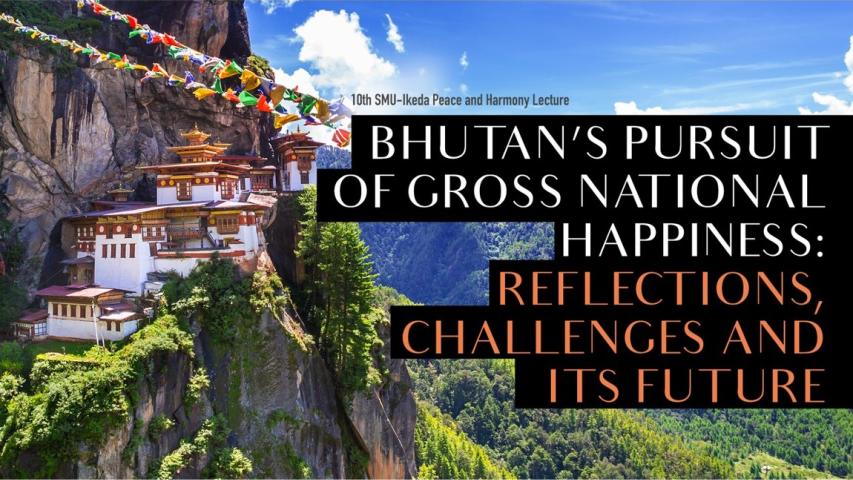
In this lecture, we will explore Bhutan's ongoing pursuit of Gross National Happiness (GNH), a development framework that prioritises not only Bhutan's economic progress but also the flourishing of a human society living in harmony with nature. The lecture will reflect on the lessons learned from implementing the GNH framework over several decades, highlighting its impact on the country's social, economic, and environmental well-being, as well as the complexities faced along the way. Looking to the future, we will discuss how Bhutan is adapting GNH to meet the needs of a changing world while preserving its core values, ensuring that happiness remains at the heart of its national identity.
Speaker
Kinzang Dorji
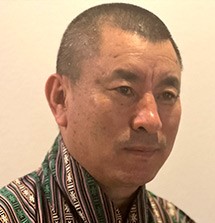 | Kinzang Dorji is currently the Ambassador of Bhutan to Thailand and is concurrently accredited to Singapore, Myanmar, and, most recently, Indonesia and Vietnam. He joined the Civil Service in 1993, beginning his career with the Ministry of Finance, where he was responsible for introducing Personal Income Tax in Bhutan in 2000. He served as Chief of Planning and Policy at the Ministry of Finance and later worked with the research group (People’s Project) before serving as Chief Negotiator for Bhutan’s accession to the WTO. He joined the Ministry of Foreign Affairs as a team member for the adoption of the happiness resolution at the UN General Assembly. He was appointed Governor of the western province (Haa) and served several years before his current assignment. He completed his high school education in Bhutan, obtained his undergraduate degree from Delhi University, and earned an MSc in Economics from London, UK. He has received training in India (IRS), Singapore (NUS), Columbia, and NDU in Washington, DC. He has also served as a board director for Bhutan Development Bank, State Trading Corporation, Bhutan Insurance, Bhutan Agro Industries, and several other organisations. |
View all Faculty Awards here
Discover all Faculty Awards and celebrate academic excellence across our faculty.