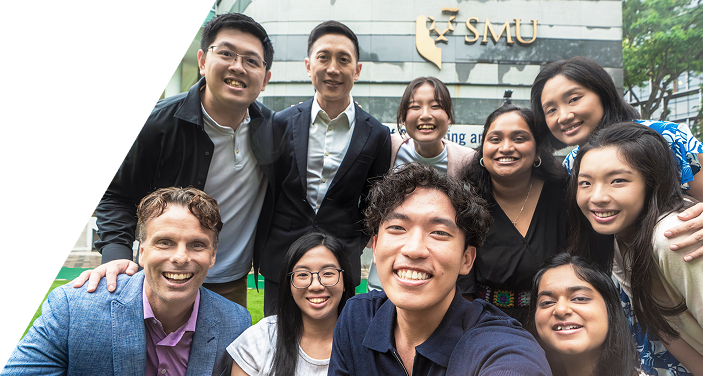

Programme Structure
The PhD in Asian Urbanisms is unique in its interdisciplinary and integrative approach. The programme is designed to purposively go beyond the traditional urban studies paradigm. In doing so, the programme exposes students to cognate ideas emerging from the humanities, economics, public policy, business, climate science, and information systems/computer science (including but not limited to areas like geographic information system, smart city management and urban systems).
Critically, this is a postgraduate programme that focuses – both theoretically and empirically – on Asian cities. Students will be taught and supervised by world-class scholars that are committed to building an understanding of the pasts, presents and futures of Asian cities. Throughout the duration of study, students will benefit from being part of an Asian management university that is located in the heart of Asia. The intellectual trajectory of our programmes will start from the urban studies tradition but will then push students to go beyond it. Our commitment to such interdisciplinarity is rooted in the premise that it is the only way our students will be appropriately equipped to tackle the most complex problems facing Asian cities.
The curriculum combines taught and research components, comprising core courses, elective courses, a PhD Qualifying Examination, and a PhD dissertation. The minimum duration of the programme is three years. Most students, however, are expected to take about four years to complete the programme. The maximum registration duration of the programme is five years, unless special approval for a longer duration is given by SMU. The maximum duration of receiving financial support from SMU PhD scholarship is 4 years.
YEAR
CURRICULUM
1 & 2
Core Courses* (6 CUs)
- Cities in Asia: Planning, Policy and Praxis
- Graduate Seminar with Invited Industry Partners
- Introduction to Interdisciplinary Research
- Principles of Sustainability
- Studying Cities: Research Methods
- Urban Studies: Theory and Method
Elective Courses* (6 CUs)
- Comparative Urbanisms
- Independent Study
- Social Life of the City
- Urban-related courses offered by Visiting Fellows
- Urban Economics & Policy
- Urban & Regional Economics
- Urban Sustainability
- Urban Technologies / Geographic Information Systems
Dissertation Proposal
Submit written dissertation proposal no later than Year 2 Term 2. The dissertation proposal needs to be approved by the Dissertation Committee by the end of Year 2 Term 2 unless permission for extension to Year 3 Term 1 is granted by the PhD Programme Director with recommendation by the Principal Supervisor.
Qualifying Exam
The PhD Qualifying Exam to be made and graded by a committee chaired by the Principal Supervisor and involving at least two other members that are not members of the dissertation committee. The exam will be comprehensive, covering all relevant areas that the Principal Supervisor deems necessary for the student to work on his/her research topic. If a student fails the exam the first time, the student has an opportunity to rewrite the exam one more time. With the approval of the Principal Supervisor, the PhD Qualifying exam can be taken anywhere between the end of Year 1 and the end of Year 2.
3
Dissertation Research
In general, there is no additional coursework for the students in the third year unless recommended by the PhD Programme Director. A student is expected to spend Year 3 working on their dissertation research.
Graduate Instructorship
The student is also required to teach at least a 0.5 CU undergraduate section (1.5-hour class time per week/3 hours a fortnight, plus consultation/preparation for at least one semester during their PhD programme. For international students, the teaching requirement will count towards fulfilling the 416 hours of TA/instructor duties required under the Graduate Assistantship Programme (GAP).
4
Conduct Research
Complete and Submit Dissertation
Complete Dissertation Defence
CUs = Course Units | * The courses offered vary each term.
Dissertation
All student are required to submit a research proposal as part of their application. This will enable a proper placement within faculty expertise. Each student needs to select his/her Principal Supervisor on application to the programme with the approval by the PhD Programme Director and Dean CIS. It is strongly advised that prospective students get in touch with their prospective supervisor before they submit their application. The Principal Supervisor must be a full-time faculty member from CIS and have prior supervisory experience and research interests that complement the research areas proposed by the candidate. In addition, the student will select a Co-supervisor in discussion with the Principal Supervisor and PhD Programme Director during Year 1. The Co-supervisor will likely be a mid-career or junior CIS faculty member with research interests that complement the research areas proposed by the candidate. The Co-supervisor will take an active part in supervision sessions and supervision support.
PhD Students
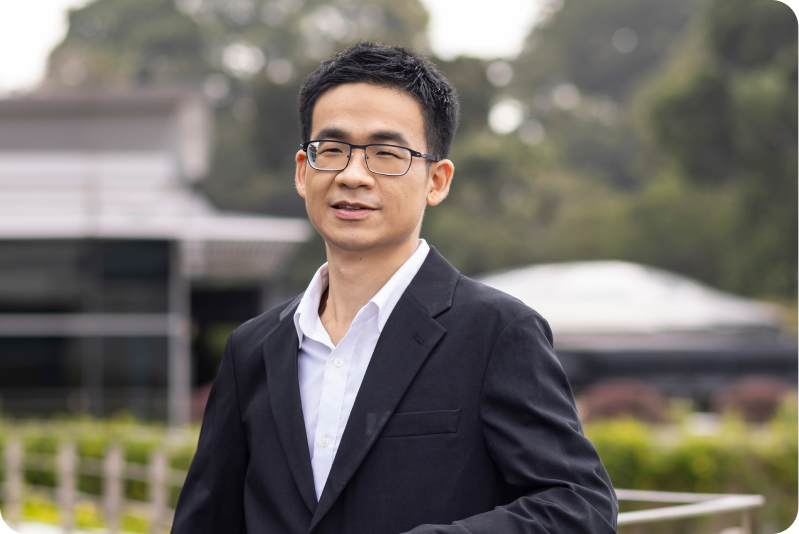
Joshua Goh Ngee Chae
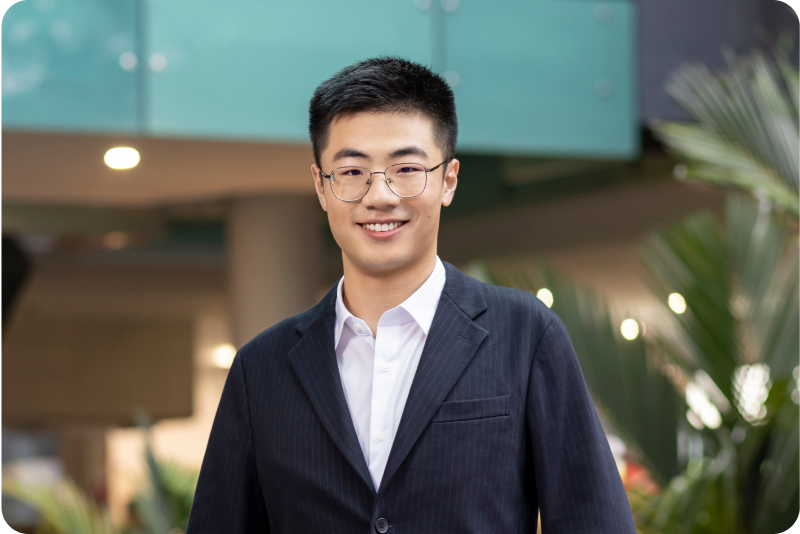
Zeng Ziheng
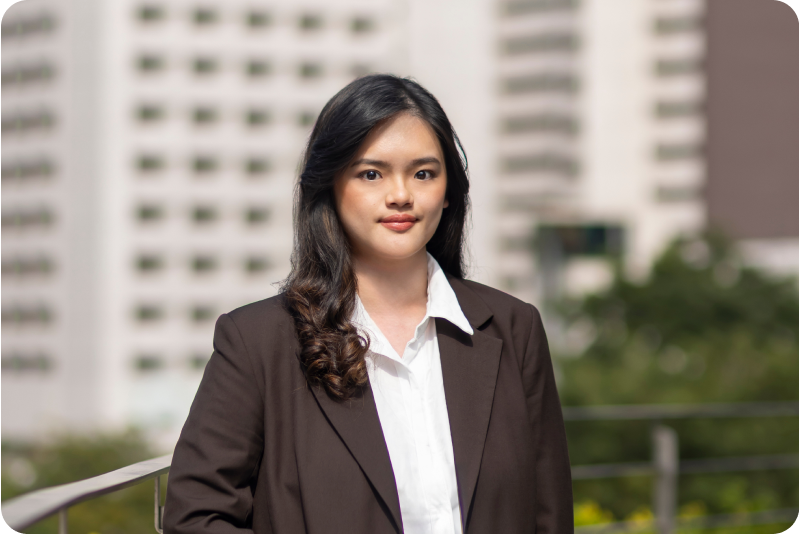
Nikita Khoo
Graduation Requirements
- Maintain a minimum GPA of 3.0
- Complete 8 Course Units of relevant coursework
- Complete 12 Course Units of Master’s Thesis
- The Thesis Committee will comprise three members.
- Each student will have a Principal Supervisor and Co-supervisor, whom they will suggest on application and finalise during Year 1. It is strongly advised that prospective students get in touch with their prospective supervisor before they submit their application. The selection must be agreed with the Programme Director and CIS Dean. The Principal Supervisor must be a full-time faculty member from CIS and have prior supervisory experience. The Co-supervisor can be a full-time SMU faculty from either CIS or another school in SMU or, if agreed by all parties concerned, from another institution. There will also be a SMU full-time faculty who will serve as a “Member” to fulfil the committee quorum.
- To fulfil the graduation requirements of the degree, students will be expected to satisfactorily complete an oral defence of their thesis.
Programme Fees
For Fees and payments on the tuition, please visit here on Fees, Scholarships and Financial Aid with the CGRS page.
Application Form
View all Faculty Awards here
Discover all Faculty Awards and celebrate academic excellence across our faculty.