

Synopsis
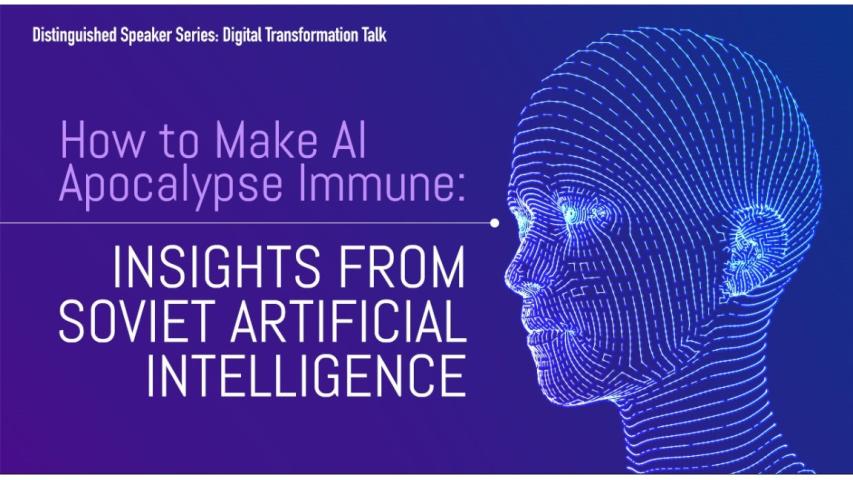
This talk, building on a larger book project on the history of Soviet artificial intelligence, advances thoughts on how to avoid the many problems of future-looking imagination of artificial intelligence. In particular, it offers several lessons on how to make artificial intelligence immune to visions of coming apocalypses, robot overlords, and the like by drawing on case studies of Chernobyl, the International Space Station, and other late and post-Soviet encounters with uninhabitable smart environments. Local apocalypses are all around us. Any humane, sustainable, and professional approach to data, statistics, and machines begins with transnational reflection transnational reflection on how often predictions of digital futures reveal more about the past than anything else.
Speaker
Benjamin Peters
 |
Benjamin Peters is a media scholar and historian and theorist of information technology. He is the author of How Not to Network a Nation: The Uneasy History of the Soviet Internet (MITP), the editor of Digital Keywords: A Vocabulary of Information Society & Culture (Princeton UP), and co-author of Your Computer is on Fire (MITP). He is 2022-2023 senior fellow at the Kate Hamburg Kolleg at RWTH in Aachen, Germany and is on leave as Hazel Rogers Associate Professor in Media Studies at the University of Tulsa. He holds a PhD from Columbia University and an affiliation with the Information Society Project at Yale Law School. |
View all Faculty Awards here
Discover all Faculty Awards and celebrate academic excellence across our faculty.