
Synopsis
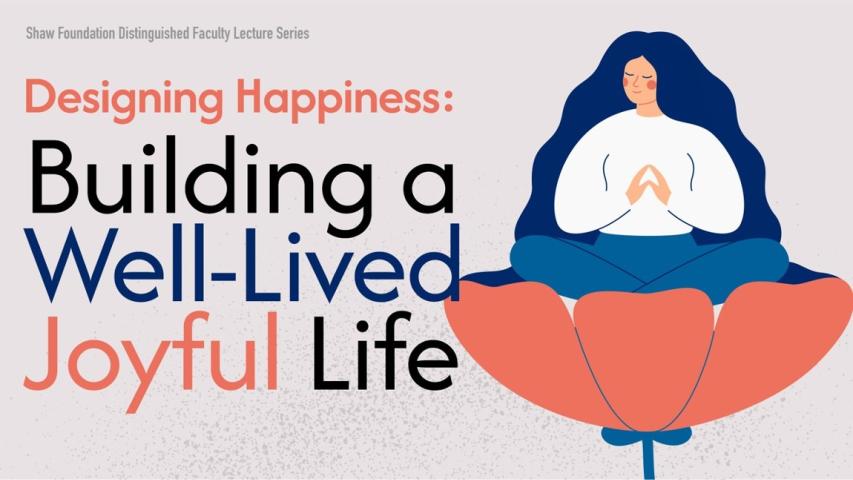
When it first started, positive psychology was mostly concerned with the study of happiness and centred on questions like, “What makes people happy?” and “Why are some people happier than others, even when their circumstances might be more challenging?” The Harvard Study of Adult Development, perhaps the longest-running longitudinal study of the subject, suggests that relationships are the critical element in long and happy lives. However, happiness is only one element of a good life, as Martin Seligman, one of the founders of the field, realised and exhorted researchers to dig deeper. Using the latest results from happiness research, Professor Burnett will suggest simple, actionable steps that allow anyone to build a well-lived and happy life, one full of curiosity and joy.
Speaker
Bill Burnett
 | Bill Burnett is an Adjunct Professor and the Executive Director of the Life Design Lab at Stanford. He received his Bachelor of Science and Master of Science in Mechanical Engineering - Product Design at Stanford and has worked in industry and academia ever since. He teaches in the undergraduate and graduate programme in Design as well as classes at Stanford d.school (or the Hasso Plattner Institute of Design, Stanford’s university-wide hub where students apply design thinking to present-world problems). In addition, he has advised student-founded startups and worked in both startups and Fortune 100 companies, including seven years at Apple designing award-winning notebook computers and several years in the toy industry designing Star Wars toys. He is the co-founder and Managing Director of Designing Your Life Institute, an educational non-profit that promotes life design skills in Singapore and across Southeast Asia. Bill is also the co-author of Designing Your Life, a New York Times #1 best-seller and a book that captures lessons from 16 years of teaching the Stanford class of the same name. In 2020, he co-authored Designing Your New Work Life, the second edition of which was published to address work after the global COVID pandemic. Both books are based on design thinking and positive psychology and attempt to help people answer the age-old question, “What do I want to be when I grow up?” |
View all Faculty Awards here
Discover all Faculty Awards and celebrate academic excellence across our faculty.