
Synopsis
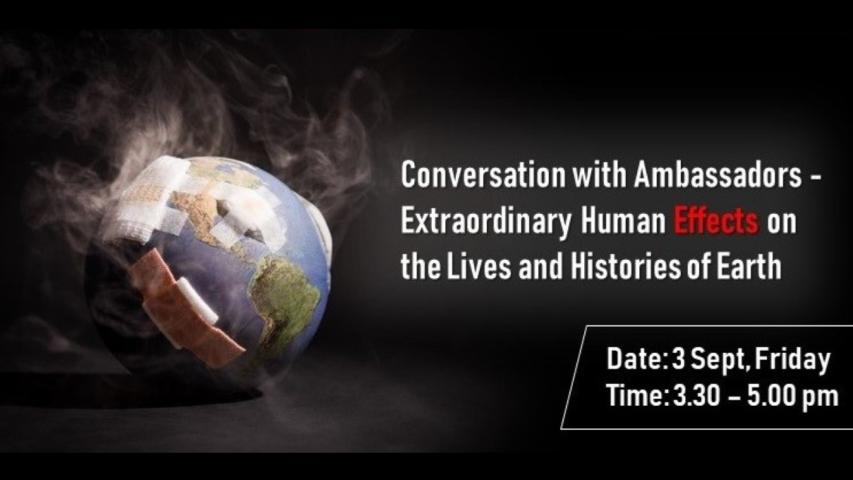
This conversation with the ambassadors will deliberate on the extraordinary human effects on the lives and histories of the planet, most visibly represented in the form of climate change. Speakers will discuss the difficult but necessary questions about political and economic values, human attitudes towards the finite resources of the planet, the double-edged role of science and technology, and the historical accountability of the privileged groups for driving these emergencies. The dialogue will help us rethink issues of sustainability and promote different attitudes to living in our historically complex Earth.
This session will be moderated by Winston Chow, Associate Professor of Science, Technology and Society and Basket Coordinator of Technology and Society component, Core Curriculum.
Speaker
Jo Tyndall
 |
High Commissioner of New Zealand to Singapore Jo Tyndall will share her views about the world’s throw-away culture, with aspirations for economic growth defined very narrowly in GDP terms – and the dawning realization that this was a fool’s paradise. We will learn how we have to treat our planet differently and work out how we – as societies and individuals – can do that. Each country has its own unique challenges: Her Excellency will share how New Zealand manages her food production, which also accounts for the biggest share of New Zealand’s export-driven economy.
|
Modise Casalis Mokitlane
 |
High Commissioner of The Republic of South Africa to Singapore Modise Casalis Mokitlane’s presentation will highlight and focus on the kind of political and consumption values that may be undergirding our human practices of land use, the complex but unequal benefits of attempts to minimize or scale back the consumption of Earth depending on the country, region or community and finally, the problem and effects of history in forging global solution to the violence against Earth.
|
View all Faculty Awards here
Discover all Faculty Awards and celebrate academic excellence across our faculty.